
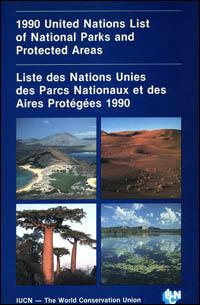
1990 United Nations list of national parks and protected areas
Publication
1990
Aquaculture Trainings, like training in agriculture and many other areas, provide innovations, best practices, and lots of technical details. The audience usually has different levels of experience, including beinngers, advanced and professional learners. Designing and conducting a training that covers the needs of all without leaving anybody behind is key to success. The training content is highly relevant and at least as relevant is HOW the content is delivered. Well selected training methods and appropriate didactics keep the audience intersted and engaged for maximum learning success.
Wetlands in Sichuan Province face mounting pressures from infrastructure, tourism, invasive species, and reduced community engagement following resettlement. In response, the UNDP‑GEF Sichuan Wetland Conservation Project (2022–2027) developed an integrated model combining stronger policies, improved protected‑area management, community co‑management, sustainable livelihoods, and nature education. To date, the project has achieved notable ecological recovery: wetland conditions have improved, water quality has risen to cleaner levels, and declining species such as Ottelia acuminata, Eurasian otters, and Oriental storks have been recorded again. On the social side, participating households have seen a 10% income increase, with over 3,600 direct beneficiaries, more than half being women. The project has also cut carbon emissions by over 71,674 tCO₂e and engaged > 5.24 million people through World Wetlands Day outreach in 2025–2026. This framework now serves as a reference for wetland conservation across the Yangtze River Basen.
Saudi Arabia contains important cliff and mountain landscapes used by Barbary Falcons for breeding and foraging. The Hadad Program applies a structured, evidence-supported monitoring model centered on priority nesting sites. Instead of relying on difficult adult population counts, the solution uses these sites to track pair occupancy, incubation, chick development, fledging, and productivity. Field Rangers conduct repeated visits, document photographic evidence through standardized forms, and submit records for central Hadad data-quality review. The model addresses fragmented baseline information, sensitive nest locations, rugged field access, and inconsistent historical records. In 2025, Hadad recorded 77 active nesting sites across 5 regions and 129 fledglings. In 2026, coverage expanded to 8 regions and 106 active nesting sites to date. This reflects expanded monitoring and improved detection, not a direct population-growth estimate. The model strengthens conservation planning, performance review, and adaptive management
The project promoted restoration, prioritizing the following ecosystems: natural grasslands, native forests, wetlands, and coastal ecosystems.
The project achieved the following:
These experiences, framed within a national planning process, fuel inclusive debate and the creation of public policy on restoration, as well as contributing to the National Biodiversity Strategy. Among the overall environmental benefits the project aimed to generate, 11,164 ha of degraded land and ecosystems have been restored.
PROAMAZONÍA, an Ecuadorian initiative for 2017–2023, which reduced deforestation and CO2 emissions. It linked national efforts to reduce emissions, priority agendas, and productive policies within the REDD+ framework, as outlined in its REDD+ Action Plan “Forests for Good Living” (2016–2025). It succeeded in reducing emissions from deforestation by 7 million metric tons of CO2 equivalents, contributing to Ecuador’s NDC. Comprising projects funded by the GCF and GEF, it was implemented by MAATE, MAG, and UNDP.
It addressed four components: REDD+ policies and institutional framework, transition to sustainable production, sustainable forest management, conservation and restoration, and operational management of REDD+. It updated land-use planning instruments, facilitated the transition to sustainable production across 93,000 hectares, conserved and sustainably managed 790,000 hectares of forests, and restored 15,000 hectares of Amazonian forests, benefiting 83,000 people.
In Zambia’s Lower Kafue Sub-Catchment, rising water demand, climate change, and land degradation have reduced water availability and negatively impacted smallholder livelihoods. To address it, GIZ implemented the AWARE project, combining catchment restoration, climate-smart agriculture, and strengthening water governance.
Communities co-plan and implement low-cost Nature-based Solutions (NbS) – soil bunds, trenches, check dams – restoring degraded catchments and improve water availability. Downstream farmers apply climate-smart agricultural practices at demonstration sites. Gender-sensitive design ensures women lead and benefit equally. Community members are trained as local experts, sustaining results beyond the project cycle.
Water User Associations (WUAs) coordinate local action, while collaboration between line ministries and the Water Resources Management Authority (WARMA) aligns outcomes with national water governance. The approach informed Zambia’s national rainwater-harvesting strategy and is being scaled under AWARE 2
Marine protected area management in Alor depends on knowledge held by local communities, practitioners and managers who have learned through years of working with coastal and marine ecosystems. Much of this expertise has remained informal, locally held and insufficiently recognised. The Alor Marine Protected Area’s Center of Excellence (CoE), hosted by Universitas Tribuana Kalabahi, addresses this gap by making local and traditional scientific knowledge a foundation of its training model. Local practitioners serve as trainers and resource persons alongside academics and technical specialists. Learning combines 70% field practice with 30% theory across four laboratories: community, governance, biodiversity and corporation/private-sector practices. The model connects practical knowledge with research and competency-based learning, allowing experience generated in Alor to be documented, recognised and transferred to protected area managers, students and practitioners from other areas.
Young people in the Western Seascape have an important role in conservation but often have limited opportunities to engage meaningfully in environmental decision-making. To address this, WWF Solomon Islands, in partnership with Dreamcast Theatre Solomon Islands, developed a youth engagement approach that combines conservation education with creative arts, storytelling, theatre, music, and filmmaking.
The solution empowers youth to become conservation champions by building their leadership and communication skills and enabling them to create and share locally relevant conservation messages. Implemented across multiple communities, the approach has increased youth participation in conservation, strengthened community awareness of environmental issues, and helped reach an estimated 10,000 people across 15 communities through youth-led outreach and advocacy activities.
Since 2008, the Tucumán Model Forest has distinguished itself through territorial governance led by the Cooperativa Generar. The governance approach centres on knowledge transfer and reinforces key processes and capacities among grassroots actors. This turns isolated efforts into coordinated “glocal” (global and local) development strategies and serves as a scalable model. Within this structure, the Cooperativa Generar uses its legal status to strengthen the Fundación Coquena (Tourism Guides), which, in turn, supports the Cooperativa Lagoferiantes (Women Producers). The organisation’s legal status enables its autonomy. It allows networks to self-manage and engage in international cooperation, even in political and economic adversity. As “Guardians of the Forest,” these organisations influence public policies on land-use, restoration, and climate action. The impact is reflected in improvements in marketing and social empowerment, which guarantee economic well-being without sacrificing ecosystem conservation.
The Latin American Model Forest Youth Network (RLJBM) is a voluntary organisation that brings together young people from Latin America and the Caribbean to strengthen their participation in environmental governance. It was created in response to the lack of youth inclusion in decision making and seeks to promote intergenerational knowledge exchange on landscape management. In 2022, the Youth Network was formed through workshops and processes to identify young leaders, and in 2023, it was formalised as an autonomous network. In 2024, RLJBM was consolidated through mentoring from the Chocó Andino Model Forest and held its first face-to-face meeting in Costa Rica, where thematic priorities and a horizontal governance structure were defined. RLJBM currently has a Central Committee representing several countries and promoting conservation, environmental education, inclusion, and regional coordination activities.
Through the “From Field to Plate” and “REDD Landscape” projects of the German Development Cooperation (GIZ), measures to promote biodiversity and other policy initiatives were implemented to specifically strengthen the structure of the Azua Biological Corridor. Stakeholders from various sectors within the Corridor expressed interest in establishing and formalizing a management structure.
During an exchange of experiences, an opportunity was identified for a tripartite collaboration involving the private initiative of banana producers in the Province of Azua, where Costa Rica shares the institutional experience of its National Biological Corridors Program with the Dominican Republic, as well as its experience with participatory landscape management models under the framework of biological corridors through local platforms.
Based on this knowledge transfer, the Dominican Republic is developing its policy and regulatory framework for biological corridors and is launching a pilot project—in partnership with the private sector and NGOs—for its first corridor.
La gestion collective de la Bourgeoisie de Cormoret depuis plusieurs siècles a permis à ce territoire de montagne de 450 ha (233 Ha pâturages boisés et 217 Ha de forêts) de préserver ses activités agricoles et forestières extensives et d’investir dans l’entretien de ses infrastructures. Située dans le Jura bernois, elle abrite une mosaïque d’habitats ouverts et boisés dont la biodiversité importante dépend du maintien du taux de boisement actuel lié lui-même à la pérennité de ses activités économiques. Les Bourgeois collectivement en suivant les règlements établis et en utilisant les organes de décision et financiers existants, grâce à des liens étroits et un investissement fort de ses membres, gèrent avec le conseil de la bourgeoisie, leur territoire durablement en contact rapproché avec des spécialistes et entreprises locales. Ceci se fait main dans la main avec la commune de Cormoret et en relation avec les autres bourgeoisies du Val Saint-Imier, le canton de Berne, la Confédération, et le parc naturel de Chasseral.