

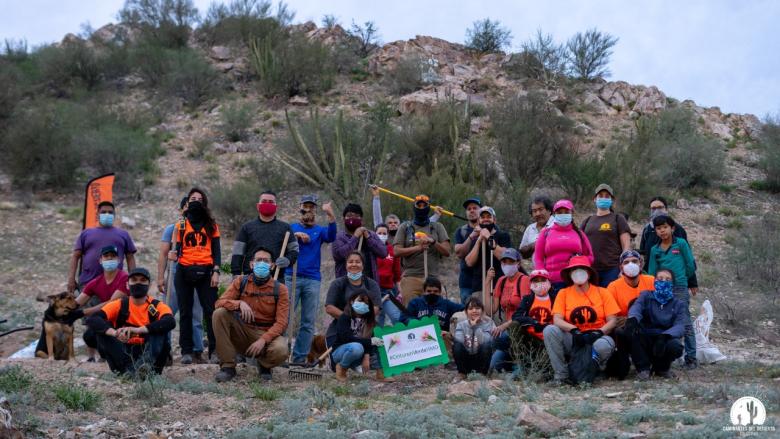
Project aimed at promoting the co-responsibility of the citizens of Hermosillo, Sonora for the construction of the “Green Belt” Linear Trail, which delimits the buffer zone between the Urban Development and an ecological conservation area in a peri-urban arid zone.
A communication and environmental education campaign was implemented to publicize the project and encourage social participation and the creation of neighborhood committees to co-manage the trail.
In addition, this project seeks to increase well-being through contact with nature and provide a safer environment, preserving the natural environment and easy access for families.