Skip to content
Group 97 Group 98
  • About
    • About GSAP
    • About GSAP SKILLS
    • Partners
  • GBF Targets & Actions
    • GBF Targets & Actions
    • GBF Actors
  • Tech4Species
  • News & Events
  • Menu
    • Taking action
    • Contact Us
    • Featured Content
    • Tech4Species
  • Knowledge HUB
  • Menu
    • Taking action
    • Contact Us
    • Featured Content
    • Tech4Species
  • Knowledge Hub
  • IUCN
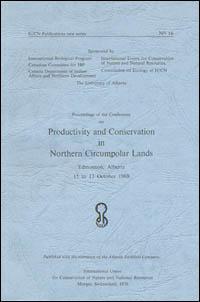
  • Productivity and conservation in northern circumpolar lands : proceedings of a conference, Edmonton, Alberta, 15-17 October 1969
Productivity and conservation in northern circumpolar lands : proceedings of a conference, Edmonton, Alberta, 15-17 October 1969

Productivity and conservation in northern circumpolar lands : proceedings of a conference, Edmonton, Alberta, 15-17 October 1969

iucn
Arctic region
Canada, Northwest Territories
Canada, Yukon
Sweden
United Kingdom, Scotland
United States, Alaska
USSR
Download Visit page
Publication
1970
Authors
Fuller, W. A., Kevan, P. G.

Related content

Green Pastures for Green Transition

The project focuses on restoring grassland habitats in the Special Nature Reserve (SNR) Kraljevac by providing the local community with thirty sheep, a solar powered shepherd’s hut and an electrical fence which shall all be used for controlled grazing over 16.5 hectares to prevent habitat succession and support species like the endangered European ground squirrel. Two hectares along Lake Kraljevac have  been afforested with native trees such as pedunculate oak, white willow, and poplar. A monitoring system for the European ground squirrel population has been established in order to define the ecological corridors for the species. 

Apart from creating favorable conditions for a stable European ground squirrel population, the provision of 30 autochthonous sheep benefits the local community, the local shepherds in particular, and ensures the involvement of the local community in the sustainable management of the critical grassland habitat, whilst enhancing public awareness of the importance of grassland ecosystem conservatio

Local voices, sustainable forests: Participatory landscape restoration

In many African countries, agricultural growth remains a key driver of development. Agriculture ensures food security and is a source of rural income and employment. However, most small farms suffer from low productivity due to soil degradation, a lack of inputs and knowledge of sustainable agricultural practices, and the effects of climate change.

In Côte d’Ivoire, these challenges are amplified by deforestation: forest cover has fallen from around 16 million hectares in the 1960s to 2.5 million today, weakening ecosystems and soil fertility while increasing rural vulnerability.

The Participatory Household-Level Restoration Plan (PPR) offers an inclusive approach where each household aligns its vision, needs, and priorities with forest restoration. By placing rural families at the heart of planning, implementation, and monitoring, the PPR promotes sustainable restoration.

Safeguarding long-term conservation of birds of prey in the Fruška Gora National Park

The supplementary feeding station for birds of prey in Fruška Gora National Park is crucial for birds of prey, especially during the winter.  However, the operationality of the feeding site has been suspended in the past few years, as it was no longer possible to provide pig carcasses from local farms due to appearance of the African swine fever in Serbia. 

The project provided a solution for the long-term sustainable operation of the feeding site through the use of a terrain vehicle with a trailer for the transport of larger cattle carcasses. Additionally, a video surveillance system with an integrated species recognition software facilitates the monitoring of species at supplementary feeding station.  The National Park staff, in collaboration with the Bird Protection and Study Society of Serbia, conducted raptor field monitoring activities, as well as capacity building activities for rangers and stakeholders for responding to emergencies involving birds of prey and education activities in nine primary schools in the area.

Improving the protection of the Eurasian Eagle-Owl population in Eastern Serbia

The Eurasian Eagle-Owl is the world’s largest owl and a vital predatory bird ensuring ecosystem balance by controlling rodent and other small mammal populations. Despite protection under international and national laws, it faces threats from human disturbances such as habitat loss, electrocution, poisoning, and cultural persecution, leading to population decline. In Europe and Serbia, a lack of nesting sites and essential data on its distribution and habits further complicate conservation.

This pilot project in Eastern Serbia aims to conserve this species using field research, modern technology (GPS tracking devices, audio and video monitoring), and educational activities across five sites in Sokobanja, Zaječar, and Knjaževac. Providing  support to five known nesting areas and limiting disturbance by visitors through remote surveillance, as well as directly involving the local community in conservation through workshops and campaigns, all ensure long term results in Eurasian Eagle-Owl protection in Eastern Serbia.

Mungano: Maputo national park friends club- redefining conservation for impact

The Maputo National Park Friends Club (MUNGANO – “friend”) is an innovative conservation finance model that mobilises domestic private-sector support for biodiversity, community development and sustainable tourism in Mozambique’s Maputo National Park (MNP). Through a membership platform for national and international businesses, MUNGANO strengthens park sustainability, builds partnerships and grows long-term local ownership. MNP, upgraded to a national park in 2021, protects 1,728 km² of terrestrial, coastal and marine ecosystems within the Maputaland–Pondoland–Albany hotspot and Africa’s first Transfrontier Marine Conservation Area, declared a UNESCO World Heritage Site in 2025. The park faces funding gaps, limited infrastructure, human–wildlife conflict, unsustainable resource use, worsened by climate change. With Club backing, MNP has installed electrified fences to protect fields, restored mangroves, improved roads and water systems, and run creative campaigns that raised its national and international profile

Mundo Marino Eco: Hybrid Sailing Catamaran for Sustainable Nautical Tourism in Spain

Mundo Marino, a Spanish company operating along the Mediterranean coast (Valencia, Costa Blanca, and Málaga), has integrated sustainable practices into nautical tourism through the design and operation of hybrid and electric catamarans. The flagship vessel Mundo Marino Eco combines sail power with Torqeedo Deep Blue electric propulsion, solar panels, and hydrogeneration systems. This innovation reduces carbon emissions by 40% compared to conventional vessels, achieving an average of 22 g CO₂ per passenger/km.


The project goes beyond tourism, serving as a platform for environmental education, citizen science, and collaborations with research institutions in marine biodiversity monitoring. By offering sustainable maritime mobility and raising awareness among thousands of visitors each year, Mundo Marino contributes to reducing pressures on marine ecosystems, aligning with the objectives of the Global Biodiversity Framework and supporting the 30×30 target in Mediterranean coastal waters.

Results-based budgeting in the Pak Kret City Municipality, Thailand: Integrating biodiversity targets into local government budgets

Pak Kret City Municipality is located on the Chao Phraya River plain in Thailand, an area with fertile soil for agriculture. The subdistrict is home to 63 native durian varieties, a flavorful tropical fruit. However, unplanned urban expansion, pollution, and climate change have threatened urban biodiversity and agricultural activities in Pak Kret. Its proximity to Bangkok, only 20 kilometers away, intensifies these pressures.

Amid this situation, Pak Kret City Municipality, with support from the Biodiversity Finance Initiative (BIOFIN) of the United Nations Development Programme (UNDP), adopted results-based budgeting: an approach that integrates biodiversity targets into government budgets, thereby increasing nature-positive investments.

As a result, Pak Kret invested USD 11 million (THB 372 million) — 17% of its total budget — in biodiversity in 2025, reflecting priority concerns to protect its distinctive durian variety, expand green spaces, and enhance air quality, water, and waste management systems.

Sri Lanka’s National Sustainable Tourism Certification scheme: Promoting sustainable experiences, supporting conservation, and catalyzing biodiversity finance

Habitat degradation, pollution, and over-exploitation have threatened Sri Lanka’s rich biodiversity, which contains high levels of endemism. Moreover, an economic crisis that began in 2019 made it challenging to increase public funding for biodiversity. The COVID-19 pandemic aggravated this situation and added pressure to the livelihoods of those dependent on tourism.

While unplanned tourism expansion can be detrimental to biodiversity, the sector is also a source of opportunities for long-term conservation and local income generation. The Sri Lanka Tourism Development Authority (SLTDA), the United Nations Development Programme (UNDP)’s Biodiversity Finance Initiative (BIOFIN), and other partners developed a National Sustainable Tourism Certification scheme to promote biodiversity conservation and support economic recovery.

As of June 2025, 37 hotels, one destination, and 204 small and medium enterprises were certified. BIOFIN estimates that this initiative has catalyzed USD 4.026 million in investments for biodiversity.

Connectivity Conservation Initiative for Fresh Drinking Water (Konitsa, Greece)

The solution aims at maintaining ecological connectivity in the long-term by allowing the free movement for the endangered carnivores wolf and brown bear among their habitats considering climate change adaptation objectives. The conservation of ecological corridors between their habitats is essential to sustain biodiversity in a changing climate condition and to ensure the resilience of ecological services. In this framework, the proposed solution address the challenge of securing fresh water supply across corridors that can support basic needs of wildlife species. In addition, this solution is based on the documentation of  traditional knowledge on sustainable water management engaging local communities and maintaining traditional building techniques related to cultural heritage.

From World Hertiage to Conservation

Jiuzhaigou National Nature Reserve, also a key national scenic area, was inscribed on the World Heritage List in 1992. Named after the nine Tibetan villages within its boundaries, Jiuzhaigou boasts not only abundant flora and fauna but also its “Six Wonders”: alpine lake clusters, waterfalls, colorful forests, snow-capped peaks, blue ice formations, and Tibetan cultural charm, attracting countless visitors worldwide.

Remarkably, Jiuzhaigou has avoided ecological crises despite tourism development, achieving a win-win balance between economic benefits and environmental conservation. It stands as a successful model of implementing the principle “protection comes first, while tourism serves as the optimal development approach.”

Ceasing Harmful Coastal Construction Subsidies to Protect Biodiversity in the Surroundings of the Mrigadayavan Palace, Thailand

The Mrigadayavan Palace, built in 1924 between the beach towns of Cha-Am and Hua Hin, was the summer house of King Vajiravudh, who ruled until 1925. To prevent coastal erosion and protect this cultural landmark, The Marine Department of Thailand (Ministry of Transport) constructed groins, seawalls, and jetties along the beach near the palace. These rigid structures cost USD 8.4 million in subsidies.

National experts, partners, and the Biodiversity Finance Initiative (BIOFIN) of the United Nations Development Programme (UNDP) measured the impact of subsidies on ecosystems in Thailand. After the team found that rigid coastal structures had accelerated erosion instead of preventing it, they presented these results to the Department of Marine and Coastal Resources (Ministry of Natural Resources and Environment).

As a result, the Thai cabinet ceased subsidies for coastal rigid structures near the palace. Existing structures were replaced with nature-based solutions, restoring the ecosystem and protecting cultural heritage.

Green Credit and Loans in Ecuador: Supporting small entrepreneurs, empowering vulnerable groups, and using an automated software to assess social and environmental risks

Ecuador is one of the world’s 17 megadiverse countries, with rich fauna and flora. However, economic reliance on non-renewable resources and unsustainable agricultural practices have threatened its biodiversity. Sustainable entrepreneurship offers an alternative to align economic activities with environmental protection. Yet, low-income women, youth, and other vulnerable groups face barriers in accessing credit to start small businesses.

Amid this situation, the National Corporation of Popular and Solidarity Finance (CONAFIPS) of Ecuador, with support from the United Nations Development Programme (UNDP)’s Biodiversity Finance Initiative (BIOFIN), developed a Social and Environmental Risk Management System (SARAS) tool: a free and automated software that enables credit unions to screen loan applications against social and sustainability criteria.

As of August 2024, credit unions approved USD 804 million in green credit using SARAS, fostering a nature-positive economy, conserving biodiversity, and supporting women and the youth.

Seed Partners

MCEEEng_1-1-1
Frame 1597884785

GSAP SKILLS

Global Species Action Plan – Species Conservation Knowledge, Information, Learning, Leverage and Sharing Online Knowledge Platform

Socials

Useful links

  • About GSAP
  • About GSAP SKILLS
  • Featured Content
  • GBF Targets & Actions
  • Tech4Species
  • Contact
  • Privacy Policy
  • Terms of Use

Copyright © 2025. All Rights Reserved.

We are using cookies to give you the best experience on our website.

You can find out more about which cookies we are using or switch them off in .

Powered by  GDPR Cookie Compliance
Privacy Overview

This website uses cookies so that we can provide you with the best user experience possible. Cookie information is stored in your browser and performs functions such as recognising you when you return to our website and helping our team to understand which sections of the website you find most interesting and useful.

Strictly Necessary Cookies

Strictly Necessary Cookie should be enabled at all times so that we can save your preferences for cookie settings.

If you disable this cookie, we will not be able to save your preferences. This means that every time you visit this website you will need to enable or disable cookies again.

3rd Party Cookies

This website uses Google Analytics to collect anonymous information such as the number of visitors to the site, and the most popular pages.

Keeping this cookie enabled helps us to improve our website.

Please enable Strictly Necessary Cookies first so that we can save your preferences!

Additional Cookies

This website uses the following additional cookies:

(List the cookies that you are using on the website here.)

Please enable Strictly Necessary Cookies first so that we can save your preferences!