
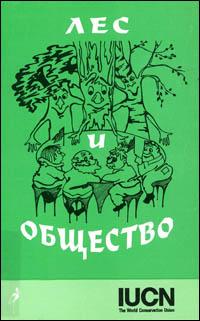
Lyes i obshchyestvo : osnovy formirovaniya obshchyestvyennogo mnyeniya. Posobiye dlya rabotnikov lyesnogo khozyaystva
Publication
2000
As the World Heritage Convention celebrates its 50th anniversary in 2022, over 1100 sites around the world are recognized as World Heritage – places that are so valuable to humanity that there conservation has been deemed our collective responsibility. Yet many of these exceptional places face increasing pressure from diverse types of development projects within and around the sites. Assessing the impacts of such projects is essential to both prevent damage to World Heritage and identify sustainable options. This Guidance and toolkit explains the process for achieving these goals. Offering practical tips and tools including checklists and a glossary, it provides a framework for conducting impact assessments for cultural and natural heritage sites.
As the World Heritage Convention celebrates its 50th anniversary in 2022, over 1100 sites around the world are recognized as World Heritage – places that are so valuable to humanity that there conservation has been deemed our collective responsibility. Yet many of these exceptional places face increasing pressure from diverse types of development projects within and around the sites. Assessing the impacts of such projects is essential to both prevent damage to World Heritage and identify sustainable options. This Guidance and toolkit explains the process for achieving these goals. Offering practical tips and tools including checklists and a glossary, it provides a framework for conducting impact assessments for cultural and natural heritage sites.
As the World Heritage Convention celebrates its 50th anniversary in 2022, over 1100 sites around the world are recognized as World Heritage – places that are so valuable to humanity that there conservation has been deemed our collective responsibility. Yet many of these exceptional places face increasing pressure from diverse types of development projects within and around the sites. Assessing the impacts of such projects is essential to both prevent damage to World Heritage and identify sustainable options. This Guidance and toolkit explains the process for achieving these goals. Offering practical tips and tools including checklists and a glossary, it provides a framework for conducting impact assessments for cultural and natural heritage sites.
As the World Heritage Convention celebrates its 50th anniversary in 2022, over 1100 sites around the world are recognized as World Heritage – places that are so valuable to humanity that there conservation has been deemed our collective responsibility. Yet many of these exceptional places face increasing pressure from diverse types of development projects within and around the sites. Assessing the impacts of such projects is essential to both prevent damage to World Heritage and identify sustainable options. This Guidance and toolkit explains the process for achieving these goals. Offering practical tips and tools including checklists and a glossary, it provides a framework for conducting impact assessments for cultural and natural heritage sites.
Other effective area-based conservation measures (OECMs) are sites outside protected areas that deliver effective and long-term in situ conservation of biodiversity. Biodiversity conservation may be the primary objective of the site, a secondary objective of a site that is managed for other purposes, or it may be an unintended consequence of the way the site is managed. OECMs may be governed and managed by governments, private entities or Indigenous peoples and local communities, or a combination of these. This tool guides an assessor through three steps to apply eight criteria which determine if a site qualifies as an OECM as set out under the Convention on Biological Diversity. For sites which do not currently meet all the criteria, the tool serves to highlight areas where further information or improvements in governance and management are required.
The Global Species Action Plan (GSAP) is a critical initiative developed to support the implementation of the Kunming-Montreal Global Biodiversity Framework (GBF), to address the increasing biodiversity loss worldwide. The GSAP outlines strategic interventions and actions to conserve and sustainably manage species while ensuring equitable benefits. Emphasizing the critical role of species in ecosystem stability, human livelihoods, and cultural heritage, the GSAP seeks to prevent extinctions, reduce threats, and ensure equitable benefits from species use. Implementation involves diverse stakeholders, including governments, Indigenous peoples and Local communities, NGOs, academia, and businesses, fostering cooperation at global, regional, and local levels. The GSAP underscores the collective responsibility to safeguard Earth’s rich biological heritage for future generations.
As the World Heritage Convention celebrates its 50th anniversary in 2022, over 1100 sites around the world are recognized as World Heritage – places that are so valuable to humanity that there conservation has been deemed our collective responsibility. Yet many of these exceptional places face increasing pressure from diverse types of development projects within and around the sites. Assessing the impacts of such projects is essential to both prevent damage to World Heritage and identify sustainable options. This Guidance and toolkit explains the process for achieving these goals. Offering practical tips and tools including checklists and a glossary, it provides a framework for conducting impact assessments for cultural and natural heritage sites.
As the World Heritage Convention celebrates its 50th anniversary in 2022, over 1100 sites around the world are recognized as World Heritage – places that are so valuable to humanity that there conservation has been deemed our collective responsibility. Yet many of these exceptional places face increasing pressure from diverse types of development projects within and around the sites. Assessing the impacts of such projects is essential to both prevent damage to World Heritage and identify sustainable options. This Guidance and toolkit explains the process for achieving these goals. Offering practical tips and tools including checklists and a glossary, it provides a framework for conducting impact assessments for cultural and natural heritage sites.
As the World Heritage Convention celebrates its 50th anniversary in 2022, over 1100 sites around the world are recognized as World Heritage – places that are so valuable to humanity that there conservation has been deemed our collective responsibility. Yet many of these exceptional places face increasing pressure from diverse types of development projects within and around the sites. Assessing the impacts of such projects is essential to both prevent damage to World Heritage and identify sustainable options. This Guidance and toolkit explains the process for achieving these goals. Offering practical tips and tools including checklists and a glossary, it provides a framework for conducting impact assessments for cultural and natural heritage sites.
As the World Heritage Convention celebrates its 50th anniversary in 2022, over 1100 sites around the world are recognized as World Heritage – places that are so valuable to humanity that there conservation has been deemed our collective responsibility. Yet many of these exceptional places face increasing pressure from diverse types of development projects within and around the sites. Assessing the impacts of such projects is essential to both prevent damage to World Heritage and identify sustainable options. This Guidance and toolkit explains the process for achieving these goals. Offering practical tips and tools including checklists and a glossary, it provides a framework for conducting impact assessments for cultural and natural heritage sites.
As the World Heritage Convention celebrates its 50th anniversary in 2022, over 1100 sites around the world are recognized as World Heritage – places that are so valuable to humanity that there conservation has been deemed our collective responsibility. Yet many of these exceptional places face increasing pressure from diverse types of development projects within and around the sites. Assessing the impacts of such projects is essential to both prevent damage to World Heritage and identify sustainable options. This Guidance and toolkit explains the process for achieving these goals. Offering practical tips and tools including checklists and a glossary, it provides a framework for conducting impact assessments for cultural and natural heritage sites.
As the World Heritage Convention celebrates its 50th anniversary in 2022, over 1100 sites around the world are recognized as World Heritage – places that are so valuable to humanity that there conservation has been deemed our collective responsibility. Yet many of these exceptional places face increasing pressure from diverse types of development projects within and around the sites. Assessing the impacts of such projects is essential to both prevent damage to World Heritage and identify sustainable options. This Guidance and toolkit explains the process for achieving these goals. Offering practical tips and tools including checklists and a glossary, it provides a framework for conducting impact assessments for cultural and natural heritage sites.