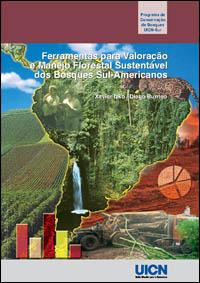
Ferramentas para valoração e manejo florestal sustentável dos bosques sul-americanos
Publication
2003
Authors
Izko, Xavier, Burneo, Diego
“La Senda del Huemul” is a conservation and environmental education initiative implemented in Cerro Castillo National Park (Aysén Region, Chile) with the aim of raising awareness of the critical situation of the huemul (Hippocamelus bisulcus), an endemic and endangered deer species, and to strengthen the link between local communities and the protected area. This project is the result of joint work between local park rangers, local organizations, the Advisory Council, and other relevant actors involved in the management of the National Park.
The trail was designed as a two-day trekking route that covers a significant section of the park, incorporating interpretive components and experiential activities so that participants can understand the threats facing the huemul, its biology, its habitat, and the importance of its conservation in relation to the Patagonian forests, meadows, and hills that sustain it.
Through a recreational activity, it is possible to directly help protect the huemul.
The RNDN, created in 2021, is the largest Natural Protected Area in Peru (6,239,205.75 ha) and the only one focused exclusively on marine ecosystems. Located 105 km off the coast of Ica, it is a vital source of resources like giant squid, sharks, and flying fish eggs for fishers from Paita, Pisco, Marcona, and Matarani. Its creation was an unprecedented multisectoral process that involved various stakeholders and governmental institutions. In 2022, the San Andres Artisanal Fishers Syndicate led the RNDN management committee, and in 2023 the Master Plan’s terms of reference were approved. The first Master Plan was developed collaboratively with fishing organizations and stakeholders, setting strategies for the conservation and sustainable use of natural and cultural resources. This plan integrates commitments to protect marine species, including the “Blue Five” (in this case whales, sharks, turtles and dolphins), and recognizes the identity and knowledge of artisanal fishers as part of the sociocultural value of the NPA.
In 1999, Danone acquired the Villavicencio mineral water brand and ownership of 64,000 hectares of land where the product originates. In line with the company’s objectives, it was voluntarily decided to dedicate this territory to private conservation.
Thus, in 2000, the Villavicencio Nature Reserve was created, the only privately managed reserve in the province.
As a food company, it was limited in its ability to carry out specific conservation actions. It was decided to conduct a pilot test with an external operator to see if it was feasible to generate tourism services. The test was positive. A business plan was developed and presented internally to the company, approved, and the Villavicencio Foundation was created in 2014 to professionalize and specialize the management of the area.
This allowed for progress on various projects and improved sustainability, with the challenge of sustaining the management and conservation costs of the protected natural area.
The Malpelo Fauna and Flora Sanctuary is a marine treasure covering 4.8 million hectares, located 490 km off the Colombian coast. But protecting such a vast area presents major challenges, especially when resources for its management are limited. This is where collaboration makes a difference! Thanks to relationships with various key players involved in managing the protected area, especially the strategic alliance with the Biodiversity Conservation Colombia Foundation through its Silky project, support is provided to the Malpelo SFF park rangers in their daily work of navigating Colombian waters to monitor and control illegal and illicit fishing, collect solid waste, conduct research and monitoring, and ensure responsible ecotourism. The results are amazing! Since 2018, these pressures have been reduced, promoting the increase of marine populations that are key to the health of the ecosystems of the Tropical Western Pacific.
Ecuador is one of the world’s 17 megadiverse countries, with rich fauna and flora. However, economic reliance on non-renewable resources and unsustainable agricultural practices have threatened its biodiversity. Sustainable entrepreneurship offers an alternative to align economic activities with environmental protection. Yet, low-income women, youth, and other vulnerable groups face barriers in accessing credit to start small businesses.
Amid this situation, the National Corporation of Popular and Solidarity Finance (CONAFIPS) of Ecuador, with support from the United Nations Development Programme (UNDP)’s Biodiversity Finance Initiative (BIOFIN), developed a Social and Environmental Risk Management System (SARAS) tool: a free and automated software that enables credit unions to screen loan applications against social and sustainability criteria.
As of August 2024, credit unions approved USD 804 million in green credit using SARAS, fostering a nature-positive economy, conserving biodiversity, and supporting women and the youth.
The jaguar (yaguareté) is the largest feline in the Americas and a national symbol in Argentina, yet fewer than 250 remain nationwide, about 90 in Misiones. Habitat loss and declining prey have increased jaguar predation on livestock and pets, harming farmer’s income and driving retaliatory killings. To transform conflict into coexistence, the Government of Misiones, UNDP (BIOFIN and IRFF), the insurer Río Uruguay Seguros, and the NGO Aves Argentinas developed the world’s first jaguar-protection insurance.
Purchased by the province of Misiones and offered free of charge to residents, the insurance provides prompt compensation to producers for verified jaguar predation. Launched in April 2025, the scheme verified five claims in its pilot phase in Comandante Andresito and has since expanded to other municipalities affected by human–jaguar conflict. By protecting rural livelihoods, the insurance discourages retaliation and protects the jaguar.
The Exclusive Artisanal Fishing Zone (ZEPA), located in the municipalities of Juradó and Bahía Solano, in Chocó, Colombia, was created to protect fishery resources and marine biodiversity, prioritizing artisanal fishing over industrial fishing. This initiative arose in response to overfishing and the negative impact of industrial fishing, which affected the livelihoods of local communities and marine ecosystems. By promoting sustainable practices, such as the use of more selective fishing gear, the ZEPA has facilitated the recovery of species and the protection of crucial habitats for marine megafauna, contributing to essential activities such as echolocation, feeding and reproduction of these species. In addition to conserving biodiversity, it has strengthened local economies by ensuring the availability of fishery resources for artisanal fishing. The ZEPA is an example of how community management and the protection of fishing traditions can lead to ecosystem conservation and improved quality of life for communities.
In the midst of the Covid-19 pandemic, different local actors in the province of Guayas the canton of Playas Villamil, including citizens, volunteers, officials of the Ministry of Environment, Water and Ecological Transition, and the Fundacion Juvimar “Juntos por la vida marina” joined forces to rescue the marine fauna that was stranded in the National Recreation Area Playas de Villamil and did not receive help due to the confinement that stopped all activities. Since then, the initiative has continued and strengthened its work in favor of the conservation of marine-coastal species.
This initiative was born from the vision of David Sarmiento, IMARPE field observer and renowned 2023 Leatherback Champion, who decided to go beyond his job. David realized that, in order to achieve effective marine conservation, it was important to build bridges with artisanal fishers, based on mutual trust and respect. Using everyday tools such as local radio stations, social media, and training spaces, David forged an authentic connection with the crews of fishing boats in the cove of San Jose (Lambayeque). His approach combined scientific expertise with a deep human sensitivity. By listening, valuing, and exchanging ideas with the fishers, he enabled them to take the lead in bringing about change. Today, they are the ones who share recordings of rescues, reflections, and data on marine megafauna. Experience shows that conservation is most effective when it stems from strong human relationships and committed local leadership, generating sustainable learning and trust among stakeholders.
In 2016, three fishing companies carried out a pre-assessment to establish a Marine Stewardship Council program. In 2017, two more joined, launching the Fishery Improvement Project toward MSC certification. Member companies, including NIRSA, Jadran Group, Servigrup, Eurofish, Tri Marine, Marbelize, Manacripex, Pacifictuna, and Tunaquick, have worked with the support of the Ecuadorian government and WWF to improve fishery management and reduce environmental impact.
TUNACONS promotes sustainable fishing in the Eastern Pacific by optimizing tuna yields through scientific research. It also trains the sector and supports the reduction of ecosystem impacts.
Since October 2017, a code of good practices for handling and releasing bycatch has been implemented, aimed at captains and crew. Key actions include:
– 59 vessels recording data on bycatch reduction and incidental catches
– Collaboration in a manta ray tagging program
– Training sessions on IATTC resolutions, sensitive species handling, and external evaluations.
MarAdentro is a scientific foundation, established in 2021 in Bahía Solano, focused on marine conservation with a mission to promote scientific advancement to enhance marine protection, through science, education, and outreach. A key component of its mission is “Shark Camp”, a project initiated in collaboration with the local tourism agency, Bahía Solano me llama. During whale shark season in Colombia, tourists and visitors can participate in a week-long excursion with the Foundation’s scientific team, allowing them to gain a deeper understanding of the fundamental principles, objectives, and methodologies of shark research.
This initiative is twofold. First, it seeks to provide financial support for the scientific research carried out by the MarAdentro Foundation, it also aims to raise awareness and reduce the stigmatization of sharks as a dangerous species, thereby fostering the establishment of additional alliances for the conservation of shark species.
Unplanned visitation often causes environmental impacts, biodiversity loss, and reduced visitor satisfaction. At the same time, tourism holds strong potential to generate income, strengthen community resilience, and support conservation financing. The Solution applies the National Park Method for Ecotourism & Visitor Management, a practical method inspired by best practices in national parks planning, into private areas management. It has 3 principles: preserving nature, enchanting visitors, and generating income. In practice, the approach guides how to develop the Visitor Management Plan. Positive results include better organization of visitation, reduced environmental impacts, greater community income from ecotourism services, and improved visitor experiences. By combining technical planning with a strong focus on people and nature, the Solution demonstrates how tourism can be a driver of both conservation and sustainable developmen
This website uses cookies so that we can provide you with the best user experience possible. Cookie information is stored in your browser and performs functions such as recognising you when you return to our website and helping our team to understand which sections of the website you find most interesting and useful.
Strictly Necessary Cookie should be enabled at all times so that we can save your preferences for cookie settings.
If you disable this cookie, we will not be able to save your preferences. This means that every time you visit this website you will need to enable or disable cookies again.
This website uses Google Analytics to collect anonymous information such as the number of visitors to the site, and the most popular pages.
Keeping this cookie enabled helps us to improve our website.
Please enable Strictly Necessary Cookies first so that we can save your preferences!
This website uses the following additional cookies:
(List the cookies that you are using on the website here.)
Please enable Strictly Necessary Cookies first so that we can save your preferences!
