Skip to content
Group 97 Group 98
  • About
    • About GSAP
    • About GSAP SKILLS
    • Partners
  • GBF Targets & Actions
    • GBF Targets & Actions
    • GBF Actors
  • Tech4Species
  • News & Events
  • Menu
    • Taking action
    • Contact Us
    • Featured Content
    • Tech4Species
  • Knowledge HUB
  • Menu
    • Taking action
    • Contact Us
    • Featured Content
    • Tech4Species
  • Knowledge Hub
  • IUCN
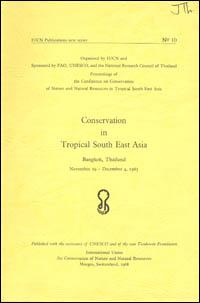
  • Conservation in tropical South East Asia : proceedings of the Conference on Conservation of Nature and Natural Resources in Tropical East Asia, Bangkok, Thailand, November 29 – December 4, 1965
Conservation in tropical South East Asia : proceedings of the Conference on Conservation of Nature and Natural Resources in Tropical East Asia, Bangkok, Thailand, November 29 - December 4, 1965

Conservation in tropical South East Asia : proceedings of the Conference on Conservation of Nature and Natural Resources in Tropical East Asia, Bangkok, Thailand, November 29 – December 4, 1965

iucn
Brunei Darussalam
Cambodia
Lao People's Democratic Republic
Malaysia
Philippines
Singapore
Southeast Asia
Thailand
Vietnam
Download Visit page
Publication
1968
Authors
Talbot, Lee M. (Lee Merriam), Talbot, Martha H.

Related content

Wildlife-Friendly Pasture Management Model in Kyrgyzstan

In the Kyrgyz Republic, pastures cover about 89% of agricultural land, and livestock production is a key sector and main source of income for rural communities. Over the past 20 years, livestock numbers have increased significantly, placing growing pressure on pasture ecosystems and leading to declining productivity. Climate change, including more frequent droughts and shifting precipitation patterns, further exacerbates these challenges. In response, a pasture management model was developed based on improved data collection and alignment of sustainable livestock use with biodiversity conservation. The model combines participatory data collection, pasture carrying capacity assessments, integration of ecological corridors into pasture planning, introduction of ecological thresholds, and regular monitoring with adaptive management. This integrated approach reduces pressure on pastures, enhances climate resilience, and balances livestock production with wildlife and ecosystem sustainability.

EduMobile: The Ombombo Mobile. Environmental Education Classroom

The Ombombo Mobile Classroom is an innovative education solution developed by EduVentures to expand access to quality learning in remote and underserved communities. By bringing education directly to learners through a mobile, flexible classroom model, the solution overcomes barriers such as distance, poverty, climate stress, and limited infrastructure. Learning activities are delivered within community settings using context-relevant materials and participatory teaching approaches.

The solution addresses challenges including low literacy levels, and lack of educational resources in rural and drought-affected regions. By providing learner-centered education, skills training, and environmental awareness programs, the Ombombo Mobile Classroom strengthens local capacity and inclusion. Positive results include increased access to education, improved learner engagement, and stronger community ownership of learning, contributing to more resilient and adaptive education systems.

Turning the Tide: Transforming Illegal Fishers into Guardians of Coastal Resources

In Masbate City, the Buntod Reef Marine Sanctuary once faced severe degradation from dynamite fishing and destructive practices driven by poverty and lack of livelihood opportunities. To address this, the Local Government Unit organized former illegal fishers into SAMAPUSI Inc. in 2008 through continuous dialogue and community engagement. The initiative focused on transforming fishers into “Sea Guardians” through capacity building, eco-tourism livelihood support, and community-based coastal enforcement. Members became active protectors and managers of the sanctuary, shifting from resource exploiters to conservation partners. The effort resulted in significant ecological recovery, including improved fish biomass and increased coral cover from 27.5% in 2002 to 57.11% in 2016. Socio-economically, members gained stable income that helped support their families and send their children to college. The initiative demonstrates that empowering communities is vital to sustaining marine ecosystems and improving livelihoods. 

Protecting Bauan’s Seas: Stronger Enforcement Meets Responsible Tourism

The Bauan Marine Protected Area (MPA) originated from the conservation efforts of Dive and Trek Resort in Barangay San Pablo, Bauan, Batangas. Through sustained protection of coastal waters and coral reefs, marine life flourished, leading to its declaration as the Bauan Fish Sanctuary on March 6, 1995, under Municipal Ordinance No. III, Series of 1995. As adjacent sites were recognized for their rich biodiversity, the MPA expanded to include more areas suitable for diving and snorkeling. However, its growing popularity attracted increasing numbers of tourists, creating pressure on marine ecosystems and management systems. In response, the local government, resort stakeholders, and the community developed coordinated solutions focused on sustainable tourism, strengthened regulation, and active conservation. These efforts balance environmental protection with tourism development, ensuring the long-term health and resilience of the Bauan MPA. 

Empowering Woman through Enterprise for Conservation

The Empowering Women through Enterprise for Conservation solution is a comprehensive, community-driven initiative designed to strengthen marine conservation efforts while improving local livelihoods on Omadal Island in Semporna. The project is rooted in the understanding that healthy marine ecosystems are essential for the well-being of coastal communities, yet these ecosystems face increasing threats from destructive practices such as fish bombing, turtle poaching, and pollution. 

A key challenge addressed by the solution is the limited participation of women in conservation and community decision-making, despite their significant roles in supporting household incomes and local economies. To bridge this gap, the initiative works through the Women’s Association of Omadal Island (WAPO), equipping women with skills in enterprise development, financial management, and organizational leadership. 

Through sustainable, conservation-linked enterprises, women can generate income while actively contributing to environmental stewardship

The Concept of One Health Village: A Model for Integrating Environmental, Veterinary and Human Health Surveillance

The One Health Village model is a community-based framework integrating human, animal, and environmental health systems at the rural level. Implemented since 2020 in a semi-rural Indian village, it addresses fragmented surveillance systems that limit early detection of zoonotic diseases, antimicrobial resistance (AMR), and environmental health risks. 

The approach combines village level governance (panchayat), animal health monitoring, environmental assessment, and human health data from Primary Health Centres (PHCs). Integration of these data streams enables cross-sectoral risk identification and coordinated response.

Key outcomes include improved rabies prevention through mass stray dog vaccination and Animal Birth Control (ABC) programs, identification of environmental contamination pathways, and increased awareness of antibiotic misuse contributing to AMR. The model also explores the use of Artificial Intelligence/Machine Learning (AI/ML) and Digital Twin frameworks for predictive health monitoring for further integration.

#TogetherforTurtles: Network-wide Marine Turtle Conservation in El Nido, Palawan

Prior to its designation as a Managed Resource Protected Area, El Nido was declared a Turtle Sanctuary in 1984, due to its vital role as a habitat for marine turtles to mate, nest, forage, and develop. All five marine turtle species found in the country have been recorded there, with three species, namely, green, hawksbill and olive ridley, nesting on its beaches. Despite this, these species remain threatened by rising sea levels, high temperatures, predation, poaching, fisheries interaction, and coastal development—all contributing to mortality without sustained intervention. In response, the El Nido Marine Turtle Conservation Network (ENMTCN) was created in 2017 to promote a collaborative, science-based approach for turtle conservation in El Nido. Since then, it has saved over 2,000 nests, released more than 150,000 hatchlings, rehabilitated 10 strandings, led a campaign against motorized vehicles in beaches, sustained 4 years of incubation temperature monitoring, and engaged thousands of locals and tourists. 

National Natural Park Serranía de Chiribiquete (Colombia): World Heritage, Conservation, and Social Resilience

The Serranía de Chiribiquete National Natural Park is Colombia’s largest terrestrial protected area, covering more than 4 million hectares, and for that reason presents multiple challenges for its management and protection. Its inscription on the World Heritage List as a mixed site in 2018 raised important questions about the area’s sustainability and the best approach to its management. Among the main challenges for managing this World Heritage Site (WHS) are climate change, tourism, and deforestation associated with unauthorized land uses, the latter occurring in areas surrounding the site. However, the greatest challenge likely relates to the presence of uncontacted indigenous communities within the WHM, which is why access to the area is strictly restricted for conservation purposes. Consequently, various strategies have been proposed, including a working strategy focused on the area of influence to address the threats facing the site.

From One to Six MPAs: Scaling Marine Protection through Bottom-Up MPA framework

This solution applies a bottom-up, community-led approach to establishing MPAs by involving local communities in every stage of decision-making. In coastal areas where trust and support for MPAs are often limited, this approach ensures that protection measures are built with the community. 

The process includes ecological assessments, public consultations and hearings, presentation of the proposed area’s status and expected benefits, and gathering community opinions, concerns, and suggestions. If the proposed MPA does not sit well with the community, concerns are identified, openly discussed, and the proposal is refined or adjusted before proceeding. Communities are then further engaged through training in monitoring, leadership development, and participation as Bantay-Dagat or members of the management body.

This approach builds trust, encourages informed decisions, strengthens stewardship, improves compliance with regulations, and increases long-term community support for MPAs and other marine conservation initiatives

Environmental education and awareness-raising to improve the sustainable use of natural resources and preserve biodiversity in southern Kyrgyzstan

The project “Biodiversity Conservation and Poverty Reduction through Community-Based Management of Walnut Forests and Pastures,” funded by BMZ and implemented by GIZ and CAMP Alatoo, promoted sustainable natural resource use in Kyrgyzstan from 2018 to 2023.

A key outcome was strengthening environmental education. In remote mountain areas, biology and ecology were taught mainly in theory, with materials poorly adapted to local realities. To address this, local teachers and the project team developed a teacher’s manual with practical exercises and teaching guidance. Approved by the Kyrgyz Academy of Education, it was introduced in 35 schools, with potential for nationwide use. The project also supported integrating Education for Sustainable Development (ESD) into pre-service and in-service teacher training

Micro-Reserves: Community-based OECMs and Biodiversity Conservation in the Kyrgyz Mountains

In the mountains of the Kyrgyz Republic, biodiversity conservation is closely linked to the natural resource use practices of local communities, particularly pasture management and hunting. Areas outside formally designated protected areas are especially vulnerable. Despite their ecological importance and economic value to communities, these territories often lack formal protection, systematic monitoring, and adaptive management mechanisms.

Officially designated in 2025, Baiboosun is a specially protected natural area of local significance and one of the first formally recognized community-managed micro-reserves in Kyrgyzstan. What began in 2019 as a voluntary community initiative responding to declining wildlife populations evolved into a legally institutionalized conservation model covering more than 20,000 hectares of high-mountain, subalpine, and alpine ecosystems. Micro-reserves can help support Kyrgyzstan’s commitment to protect 30% of its territory by 2030.

Participatory development of an action plan for the restoration of the landscape and forests at the headwaters of the Mékrou Watershed

In northern Benin, the decline in vegetation cover is contributing to soil degradation and biodiversity loss. The headwaters of the Mékrou River basin (TBV), covering an area of 36,316 hectares and located in the Atacora department, is severely affected by this phenomenon. Between 2005 and 2020, nearly 95% of the dense forests have disappeared, and 46.6% of the gallery forests are now degraded, thereby weakening ecosystems and the living conditions of local populations. The participatory development of an action plan for landscape and forest restoration (LFR) constitutes a restoration solution that involves all stakeholders, with a focus on local communities and their restoration needs. This process, developed at the Mékrou TBV level, resulted in an RPF action plan validated by all stakeholders, whose shared vision is: to restore and protect the Mékrou forest landscape in order to improve socioeconomic conditions by 2030.

Seed Partners

MCEEEng_1-1-1
Frame 1597884785

GSAP SKILLS

Global Species Action Plan – Species Conservation Knowledge, Information, Learning, Leverage and Sharing Online Knowledge Platform

Socials

Useful links

  • About GSAP
  • About GSAP SKILLS
  • Featured Content
  • GBF Targets & Actions
  • Tech4Species
  • Contact
  • Privacy Policy
  • Terms of Use

Copyright © 2025. All Rights Reserved.

We are using cookies to give you the best experience on our website.

You can find out more about which cookies we are using or switch them off in .

Powered by  GDPR Cookie Compliance
Privacy Overview

This website uses cookies so that we can provide you with the best user experience possible. Cookie information is stored in your browser and performs functions such as recognising you when you return to our website and helping our team to understand which sections of the website you find most interesting and useful.

Strictly Necessary Cookies

Strictly Necessary Cookie should be enabled at all times so that we can save your preferences for cookie settings.

If you disable this cookie, we will not be able to save your preferences. This means that every time you visit this website you will need to enable or disable cookies again.

3rd Party Cookies

This website uses Google Analytics to collect anonymous information such as the number of visitors to the site, and the most popular pages.

Keeping this cookie enabled helps us to improve our website.

Please enable Strictly Necessary Cookies first so that we can save your preferences!

Additional Cookies

This website uses the following additional cookies:

(List the cookies that you are using on the website here.)

Please enable Strictly Necessary Cookies first so that we can save your preferences!