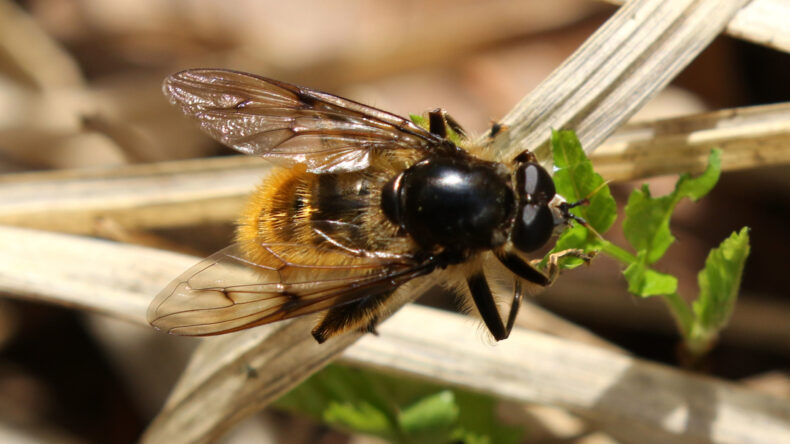
The IUCN Save Our Species programme, in collaboration with the European Union, is pleased to announce the launch of the European Fund for Youth Action on
Empowering Europe’s youth to protect pollinators and address biodiversity threats – IUCN SOS
The IUCN Save Our Species programme, in collaboration with the European Union, is pleased to announce the launch of the European Fund for Youth Action on
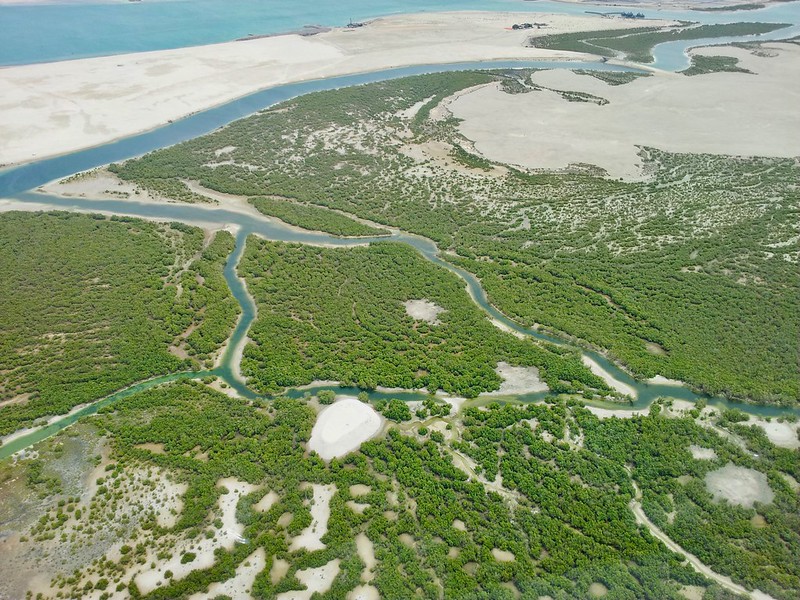
Inland waters – such as rivers, lakes and other wetlands – are among the most biodiverse ecosystems on the planet. They are also the most threatened; almost one in three species is at risk of extinction and monitored populations of freshwater species have declined by 85% since 1970. The loss of these ecosystems has cascading effects on human livelihoods, cultures and our overall well-being. While protected and conserved areas can play an important role in bending the curve of inland water biodiversity and ecosystem loss, they have rarely been designed, designated, and managed for that purpose. Motivated by the Kunming-Montreal Global Biodiversity Framework’s inclusion of inland waters in the target to conserve 30% of the planet by 2030, this report provides guidance in employing protected areas and other effective area-based conservation measures to benefit these ecosystems and the biodiversity they support. Through a series of case studies and synthesized research, it highlights how integrating the unique needs of inland waters into area-based strategies can improve conservation effectiveness across all realms, build climate resilience and sustain critical ecosystem services.
This programme of work contains four interlined, cross-cutting elements and 16 programme goals. It is intended to assist Parties in establishing national programmes of work with targeted goals, actions, specific actors, time frame, inputs and measurable outputs. Parties may select from, adapt, and/or add to the activities suggested in the current programme of work according to national and local conditions and their level of development.
The World Trade Organization (WTO) Agreement on Fisheries Subsidies, was adopted at the 12th Ministerial Conference (MC12) on 17 June 2022. It prohibits harmful fisheries subsidies, which are a key factor in the widespread depletion of the world’s fish stocks.
Members also agreed at MC12 to continue negotiations on outstanding issues with a view to making recommendations by MC13 for additional provisions to further enhance the disciplines of the Agreement.
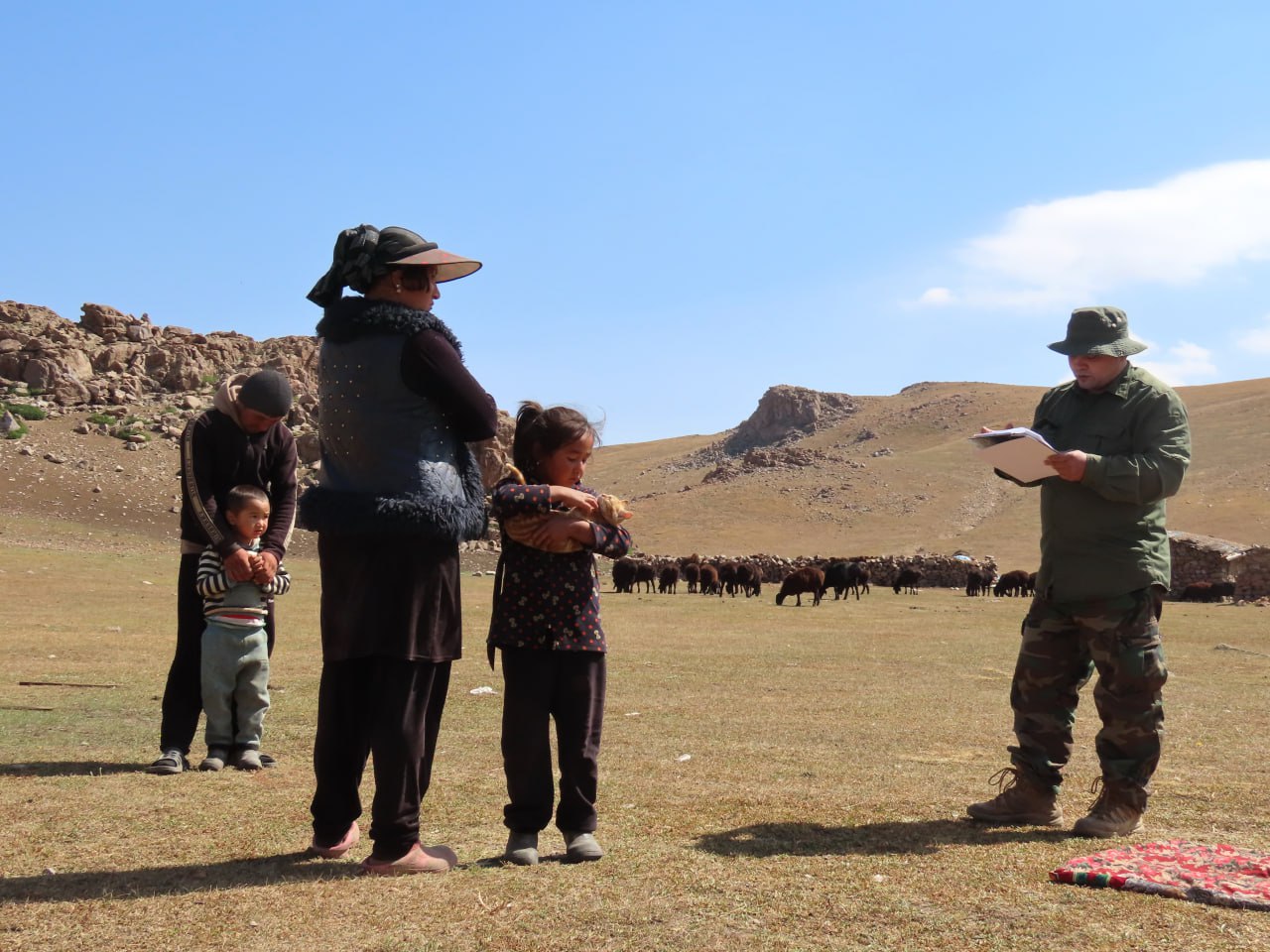
As human-wildlife conflicts become more frequent, serious and widespread worldwide, they are notoriously challenging to resolve, and many efforts to address these conflicts struggle to make progress. These Guidelines provide an essential guide to understanding and resolving human-wildlife conflict. The Guidelines aim to provide foundations and principles for good practice, with clear, practical guidance on how best to tackle conflicts and enable coexistence with wildlife. They have been developed for use by conservation practitioners, community leaders, decision-makers, researchers, government officers and others. Focusing on approaches and tools for analysis and decision-making, they are not limited to any particular species or region of the world.
The SMART platform consists of a set of software and analysis tools designed to help conservationists manage and protect wildlife and wild places. SMART can help standardize and streamline data collection, analysis, and reporting, making it easier for key information to get from the field to decision-makers.
SMART supports a broad range of conservation management activities, including biodiversity conservation, law enforcement, tourism and visitor management, natural resources use, intelligence, and performance and threat level assessments.
Our approach covers three areas: cutting-edge technology, building conservation capacity, and empowering a global network of SMART conservation practitioners. The SMART Approach is supported by a unique, long-term alliance of leading conservation organizations, offering powerful applications in conservation practice to ensure the survival of the Earth’s biodiversity for generations to come.
A consistent methodology for prioritising species conservation efforts based on extinction risk data (the Red List) and phylogenetic information; EDGE lists, representing the most evolutionarily distinct and threatened species on Earth, are currently available for all amphibians, birds, mammals, ray-finned fish, reptiles, sharks and rays, freshwater crayfish, and gymnosperms, with lists for other groups, including all angiosperms, forthcoming
The Coalition is a global network of conservation genetic experts working towards a shared goal of improving the integration of genetic information into conservation policy and practice.
The Coalition also aims to increase global capacity in conservation genetics by offering opportunities and support for currently underrepresented groups.
How to use
Further information is available at: https://www.coalitionforconservationgenetics.org
A set of webinars, reports, and publications on genetic research, capacity building, and policy are available on the Resources page at:
https://www.coalitionforconservationgenetics.org/resources
The study by O’Brien et al. (2022) can be accessed at: Bringing together approaches to reporting on within species genetic diversity – O’Brien – 2022 – Journal of Applied Ecology – Wiley Online Library
This IUCN-OIE publication provides an overview of the science-based processes and tools available for wildlife disease risk analysis and their application to a broad range of contemporary issues, including human-wildlife interactions, domestic animal-wildlife interactions and the impacts of massive ecological change on biodiversity conservation. The guidelines will be of value to those policy makers and decision makers faced with the social, political and technical complexities involved in wildlife-disease-associated scenarios.This is a companion volume to the Manual of Procedures for Wildlife Disease Risk Analysis.
Connectivity 101 is a free, self-paced course provided by the Wildlife Connect Initiative – a partnership of the World Wide Fund for Nature (WWF), Center for Large Landscape Conservation (CLLC), IUCN World Commission on Protected Areas – Connectivity Conservation Specialist Group (CCSG), and Convention on Migratory Species (CMS), designed with UNDP’s Learning for Nature.
Connectivity 101 teaches the basics of ecological connectivity conservation. The course will present general and replicable best practices for connectivity conservation and context-sensitive case studies worldwide. The course will focus on an audience of conservation practitioners but will also be accessible to a general audience. A certificate will be awarded to those who complete the course. Currently, the course is offered in English. Translations to other UN languages may be available in the future.
This IUCN policy affirms that sustainable use of wildlife can be consistent with, and contribute to, biodiversity conservation This fundamental principle applies to all species, whatever their level of extinction risk. However, stringent safeguards and a high level of precaution are required when considering whether or not the harvest of a threatened species can be justified.
How to use
The IUCN Global Standard for Nature-based Solutions (NbS) is a user-friendly framework for the verification, design, and scaling up of NbS. The Standard contains 8 Criteria and 28 Indicators and aims to provides users with a robust framework for designing NbS. The Standard is designed to support users to apply, strengthen, and improve the effectiveness, sustainability, and adaptability of their NbS interventions. It also provides a mechanism for developing a consistent approach to NbS.
An ESIA is a statement about the likely impacts of a proposal and how the identified negative impacts can be mitigated and managed and how the positive impacts can be enhanced. The purpose of this review procedure is to ensure that the Initial Environmental Examination (IEE) and the Environmental Impact Assessment (EIA) reports provide adequate assessment and protection measures to manage environmental and social impacts. A systematic approach to review is needed to ensure that the environmental and social impact assessment reports comply with requirements, are consistent with standards of good practice, and provide good quality information to support decision making.
The GSPC – A Plan to Save the World’s Plant Species – highlights the importance of plants and the ecosystem services they provide for all life on earth, and aims to ensure their conservation. The GSPC includes 16 targets for plant conservation. An updated GSPC was formally adopted at the 10th meeting of the Conference of the Parties to the CBD.
The Biological Diversity Protocol (BD Protocol) provides companies with a standardised accounting and reporting framework to consolidate their biodiversity impact data across value chains and jurisdictions. The BD Protocol assists companies to develop their biodiversity impact inventory and the associated Statements of Biodiversity Position and Performance from site or project management to disclosure.
The BD Protocol is an output of the Biodiversity Disclosure Project (BDP), an effort spearheaded by the National Biodiversity and Business Network (NBBN) of South Africa and managed by the Endangered Wildlife Trust (EWT), in collaboration with a wide range of stakeholders. The BD Protocol aims to support existing impact measurement approaches so that biodiversity impact disclosure becomes comparable across industries and companies.
The Responsible Business Alliance (RBA) Practical Guide to Responsible Sourcing of Goods and Services outlines standard procurement steps to appropriate RBA tools and resources, to help give buyers confidence the products that they procure from RBA members are made in socially and environmentally responsible ways.
These principles were developed by the FAO, IUCN Commission on Ecosystem Management, and the Society for Ecological Restoration to support implementation of the UN Decade on Ecosystem Restoration. The second edition of was produced by the Society Ecological Restoration in 2019. These Standards provide a guide for everyone involved in restoring degraded ecosystems — whether terrestrial, freshwater, coastal, or marine. They present a robust framework for restoration projects including effective design and implementation. The Standards support development of ecological restoration plans, contracts, consent conditions, and monitoring and auditing criteria. The Standards establish eight principles that underpin ecological restoration and recommend performance measures for restoration activities for industries, communities, and governments to consider. The second edition also includes an expanded glossary of restoration terminology.
The PANORAMA platform documents and promotes examples of inspiring solutions on conservation and sustainable development topics. PANORAMA allows practitioners to share their experiences, increase recognition for successful work, and to learn how similar challenges have been addressed around the globe. Over 1200 case studies are presented in a standard format that identifies “building blocks” (key success factors) and the context in which solutions were implemented. Solutions consist of elements that can potentially be replicated or scaled up in other geographic, social, or sectorial contexts. The PANORAMA initiative has many partners. The partnership secretariat is jointly managed by IUCN and GIZ.
The Urban Alliance is a diverse global coalition of international partners committed to bringing cities into balance with nature. Several resources are available including an IUCN briefing paper, the Urban Nature Indexes: methodological framework and key indicators, and the IUCN Urban Toolbox. This is a catalogue of IUCN knowledge products on urban biodiversity that provides guidance to subnational governments, municipalities, and urban professionals on nature-positive development in urban environments. The tools featured support assessment, planning, design, implementation, and monitoring.
How to use
This CBD programme of work consists of four elements (assessment, adaptive management, capacity-building, and mainstreaming) and three cross-cutting initiatives (on conservation of pollinators, soil biodiversity, and biodiversity for food and nutrition). The programme of work identifies policy issues that governments can consider when addressing such matters, while considering various ways and means to improve the capacity of stakeholders and to promote the mainstreaming and integration of agricultural biodiversity into sectoral and cross-sectoral plans and programmes at all levels.
The Living Planet Index measures the state of the world’s biodiversity based on population trends of vertebrate species from terrestrial, freshwater, and marine habitats. The LPI has been adopted by the Convention of Biological Diversity (CBD) as an indicator of progress towards its targets. The LPI is compiled by WWF and ZSL based on trends in thousands of population time-series data collected from monitored sites around the world. The Living Planet Database contains population time-series data on the abundance of tens of thousands of vertebrate species between 1970 and 2021. It is publicly available, except for some confidential records that cannot be shared.
How to use
This programme of work contains four interlined, cross-cutting elements and 16 programme goals. It is intended to assist Parties in establishing national programmes of work with targeted goals, actions, specific actors, time frame, inputs and measurable outputs. Parties may select from, adapt, and/or add to the activities suggested in the current programme of work according to national and local conditions and their level of development.
The Fonseca Species Conservation Fund (FSCF) was established in 2024 by the Global Environment Facility (GEF) and Re:wild to honor the passion of the late Gustavo Fonseca, long-standing GEF director of programs, for species conservation and building capacity of the next generation of conservationists.
The FSCF draws on the expertise of IUCN Species Survival Commission Specialist Groups and other key partners to ensure all funding goes toward priority projects. Through the FSCF, grantees will access funding support, the expertise of the selection committees, and connections with partner organizations.
Competence frameworks are widely used in many professional sectors, helping to develop capacity by defining and recognising the required skills, knowledge and personal attributes. Registers of competences have been developed within the conservation sector. A global register of competences for threatened species recovery practitioners is a register of competences in the form of a directory of the possible skills, knowledge and personal attributes required by practitioners working in threatened species recovery programmes around the world, in both in-situ and ex-situ contexts. This register has the potential to transform approaches to capacity development within threatened species recovery and help improve the effectiveness of this branch of conservation. Its structure largely follows that of A global register of competences for protected area practitioners (Appleton, 2016).
This website uses cookies so that we can provide you with the best user experience possible. Cookie information is stored in your browser and performs functions such as recognising you when you return to our website and helping our team to understand which sections of the website you find most interesting and useful.
Strictly Necessary Cookie should be enabled at all times so that we can save your preferences for cookie settings.
If you disable this cookie, we will not be able to save your preferences. This means that every time you visit this website you will need to enable or disable cookies again.
This website uses Google Analytics to collect anonymous information such as the number of visitors to the site, and the most popular pages.
Keeping this cookie enabled helps us to improve our website.
Please enable Strictly Necessary Cookies first so that we can save your preferences!
This website uses the following additional cookies:
(List the cookies that you are using on the website here.)
Please enable Strictly Necessary Cookies first so that we can save your preferences!