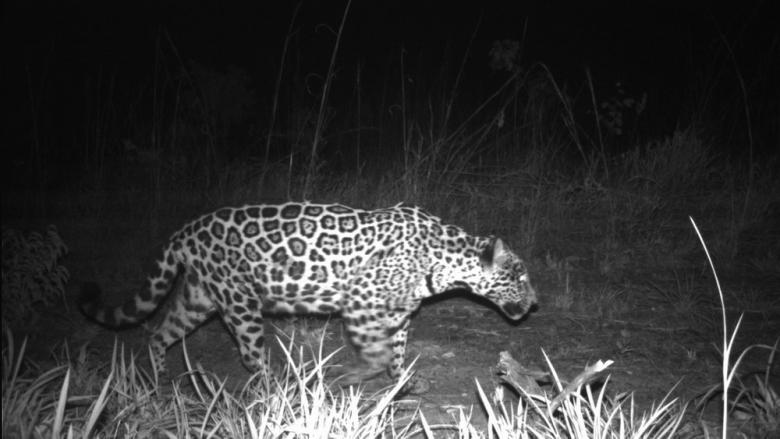

Since 2023, the Pró-Onça Institute has led a community-driven initiative in Brazil’s southern Cerrado to mitigate human-jaguar conflict and enhance climate resilience. We empower rural women as leaders in habitat restoration and wildlife monitoring, using drones, satellite data, camera traps, and geospatial tools to track jaguar movements across 70,000 hectares. Real-time data informs coexistence strategies between jaguars and ranchers. The solution supports the Kunming-Montreal Global Biodiversity Framework: Target 3 (conservation), Target 4 (restoration), and Target 21 (participation). It combines technological innovation with community leadership, yielding measurable outcomes: increased female participation, reduced conflict, and improved ecosystem resilience. Local conservation committees and ecotourism initiatives promote long-term sustainability, while responsible e-waste management ensures environmental integrity.