

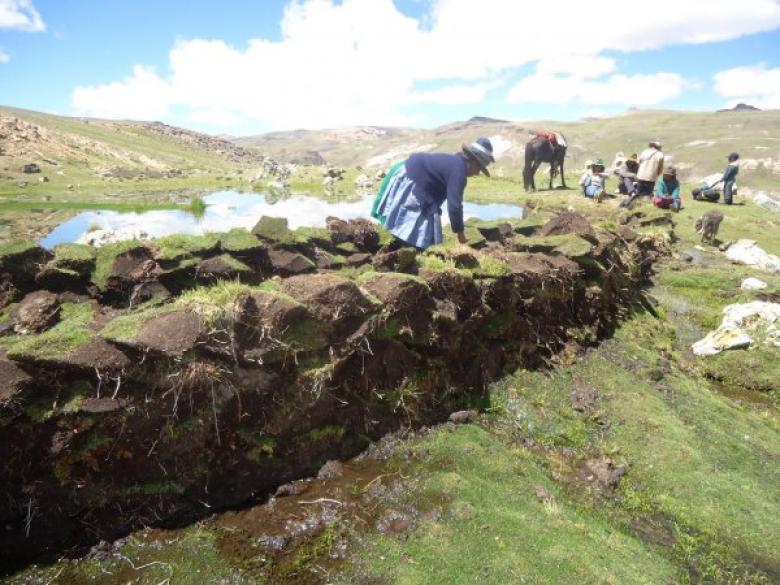
This solution was implemented in the Huacrahuacho micro-watershed, located in a high Andean ecosystem called Puna above 3,800 meters above sea level. It was designed to address the problems of drought and reduction of water sources during the dry season for human consumption and agricultural and livestock use. Its objectives were to capture, store and infiltrate water and recharge the aquifers; increase/maintain the flow of springs; generate a microclimate with higher humidity; and conserve biodiversity.
The qocha, a Quechua word meaning small lagoon, was the focus of a set of measures incorporating afforestation, infiltration ditches, natural pasture management and collector or adductor ditches.
Thanks to these measures built by the families and at the communal level, there is more water during the dry season, which has allowed the recovery of natural pastures for livestock production and a change towards a more humid landscape with greater biodiversity and scenic beauty.