

Enhancing farmer resilience in Benin: Terra preta as sustainable and more effective alternative to expensive mineral fertilisers
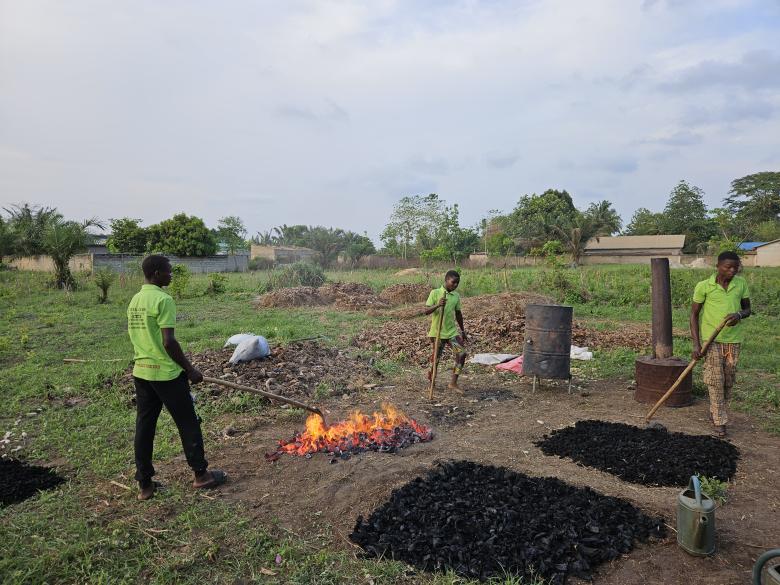
A 2016 study found 90% of Benin’s soils, notably in Borgou, Alibori and Zou, have low to very low fertility, cutting yields and threatening food security. Volatile mineral fertilizer prices make inputs unaffordable without subsidies. Locally made biochar amendments such as Terra preta increase farmers’ resilience and cost less than half of subsidized fertilizer. Biochar, produced by pyrolysis of organic matter, corrects soil acidity and, when mixed with compost or fertilizer, forms Terra preta, which improves yields and carbon storage. GIZ’s ProSoil programme promotes Terra preta by turning corn cobs and cotton stalks into biochar using Kon-Tiki kilns, which burn pyrolysis gases to cut toxic emissions. Using local residues maintains soil organic carbon for 100 years and yields a positive emission balance. ProSoil backs LTA graduate startups and the women’s NGO AFVA, trains 2,226 gardeners and 30 startups in Terra preta production, but scaling is limited by low investment capacity and costly MRV for carbon markets.