Skip to content
Group 97 Group 98
  • About
    • About GSAP
    • About GSAP SKILLS
    • Partners
  • GBF Targets & Actions
    • GBF Targets & Actions
    • GBF Actors
  • Tech4Species
  • News & Events
  • Menu
    • Taking action
    • Contact Us
    • Featured Content
    • Tech4Species
  • Knowledge HUB
  • Menu
    • Taking action
    • Contact Us
    • Featured Content
    • Tech4Species
  • Knowledge Hub
  • IUCN
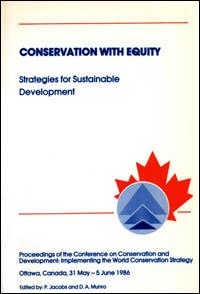
  • Conservation with equity : strategies for sustainable development : proceedings of the Conference on Conservation and Development : implementing the World Conservation Strategy, Ottawa, Canada, 31 May – 5 June 1986
Conservation with equity : strategies for sustainable development : proceedings of the Conference on Conservation and Development : implementing the World Conservation Strategy, Ottawa, Canada, 31 May - 5 June 1986

Conservation with equity : strategies for sustainable development : proceedings of the Conference on Conservation and Development : implementing the World Conservation Strategy, Ottawa, Canada, 31 May – 5 June 1986

iucn
Australia
Indonesia
Latin America
Nepal
Zambia
Download Visit page
Publication
1987
Authors
Jacobs, Peter, Munro, David A.

Related content

2026

Integração da mudança de comportamento na conservação da biodiversidade

This document presents the findings of a comprehensive needs assessment conducted by the IUCN SSC CEC Behaviour Change Task Force. It is designed to provide a structured understanding of the challenges, opportunities, and actionable recommendations for integrating behavioural sciences into conservation strategies. The report aims to serve as both a diagnostic tool and a roadmap for advancing the application of behavioural sciences in conservation efforts.

Sqba Community Adopts the Satoyama Initiative: Promoting Eco-Friendly Farming and Traditional Crop Conservation

The Sqba Community is located in a mid-altitude forest with abundant ecological resources. Once an industrial area for the Hrung tribe, the community now comprises 33% Atayal, alongside populations of Hakka, Minnan, and Mainlanders. Local industries center on agriculture, particularly fruit production such as persimmons, and tourism, featuring campsites, ecotours, fruit-picking experiences, cultural ecology guided tours, and DIY workshops that make use of local ecological resources. Under the Satoyama Initiative, the Taichung Branch of the Forestry and Nature Conservation Agency conducted resilience assessment workshops (RAWs) in collaboration with locals to identify and prioritize urgent needs, such as conserving traditional crops, promoting sustainable use of forest, river, and field resources, and leveraging ecological assets for income generation and marketing. The local government and agricultural technology departments also participated.

Eco-Tourism for Mountain Communities in Khan Tengiri State Nature Park, Kyrgyzstan

In Kyrgyzstan, livestock herding remains a cornerstone of rural livelihoods, yet inefficient resource use and unsustainable herd sizes are accelerating land degradation, increasing greenhouse gas emissions, and creating environmental and public health risks—all of which heighten the impacts of climate change. Ecotourism is often presented as a complementary livelihood option, but it also comes with its own set of challenges. These include ensuring that tours respect nature and do not harm protected areas, difficulties in connecting tour operators with new or remote destinations, limited local services and marketing capacity, and ensuring that tourism activities genuinely support conservation efforts.

Outdoor education for young students to a pecan tree collection to raise awareness about pecan tree varieties and agrobiodiversity

Pecan tree [Carya illinoensis (Wangenh.) K. Koch] is the most important nut tree of North America. In Portugal, a pecan tree collection was planted for agronomic research in the 1980-90s with the purpose of evaluating these nut trees’ adaptability to several distinct Portuguese local geophysical and climatic conditions.

Nowadays, this collection is a biological resource of interest not only in terms of agrobiodiversity, but also for educational purposes through outdoor visits. These are organized for students and the public, with the aim of raising awareness about Pecan tree varieties and biodiversity. 

Outdoor visits with young students address three current relevant phenomena – extinction of experience, nature disconnection and plant awareness disparity (i.e. – the idea that students tend not to notice or appreciate the plants in their environment).

Outdoor visits have helped students and the wider public to learn about pecan tree biodiversity. The collection is managed by INIAV, I.P. and Oeiras Municipality.

Watering troughs for strictly protected animal species

This solution focuses on addressing the challenge of surface water availability for wildlife in the mountain regions in Southwestern Serbia. Less surface water is available to wildlife due to climate change, jeopardizing the survival of numerous protected species such as the Griffon vulture, Cinereous vulture, Eastern imperial eagle, Ural owl, Brown bear and Common wolf. This project provides for a reliable, year-round water supply system through the construction of watering troughs and associated infrastructure near the existing supplementary feeding site for vultures, birds of prey and large carnivores. Advanced real time video surveillance has been made available to monitor usage and collect data on the movements and diversity of protected species at the supplementary feeding and watering site. The solution also includes an awareness-raising campaign  for the local community on the importance of the habitat and species conservation.

Successful Establishment of the WIO Mangrove Network

Formal registration as an NGO granted Western Indian Ocean Mangrove Network (WIOMN)  essential funding access, legal identity, legitimacy, and governance needed to fulfill its mission. Although founded in 2011 with members across 10 countries, WIOMN lacked formal NGO status, limiting its potential and stakeholder recognition. To address this, WWF, IUCN, and Wetlands International formed a consortium providing technical and financial support, enabling WIOMN’s successful registration in 2021. Since then, the network secured international project funding and was appointed by the Nairobi Convention to lead the Regional Mangrove Action Plan (RMAP) development. 

Natural measures for ecological Gradac

The Public Water Management Company “Srbijavode”, in cooperation with the protected area manager “Ecological Society Gradac” achieved significant ecological restoration and educational outreach in the Gradac River area. The project involved riverbed clearing by mechanically removing obstacles to river flow, such as large fallen tree trunks, stumps and over 3,500 m³ of sediment, to enhance river flow and restore ecological balance. PWC “Srbijavode” implemented bioengineering interventions by installing willow-wattle structures to provide a nature-based solution for preventing riverbank erosion along a pilot area of 150 m. Throughout the project, scientists from the Institute for Biological Research “Siniša Stanković” conducted biodiversity assessments to ensure minimal negative impact on the ecosystem and to highlight the Gradac River’s good water quality. The Ecological Society Gradac engaged with over 250 primary school students in the Valjevo area through educational workshops.

Conservation and sustainable use of Indigenous agricultural genetic diversity in Hubei

Hubei Province, a key agricultural region in central China, boasts rich agrobiodiversity with over 6,200 crop varieties and 23 livestock species. However, policy focus on production intensification threatens traditional farming practices and the diversity of genetic resources for food and agriculture (GRFA). This Solution prioritizes in-situ agrobiodiversity conservation that reduces GRFA threats, exemplified by a project targeting three indigenous varieties—Yanzhi rice, Wudang tea, and black goat—and establishing demonstration sites in Xishui, Yunyang, and Danjiangkou to promote conservation approaches.

Green Pastures for Green Transition

The project focuses on restoring grassland habitats in the Special Nature Reserve (SNR) Kraljevac by providing the local community with thirty sheep, a solar powered shepherd’s hut and an electrical fence which shall all be used for controlled grazing over 16.5 hectares to prevent habitat succession and support species like the endangered European ground squirrel. Two hectares along Lake Kraljevac have  been afforested with native trees such as pedunculate oak, white willow, and poplar. A monitoring system for the European ground squirrel population has been established in order to define the ecological corridors for the species.

Apart from creating favorable conditions for a stable European ground squirrel population, the provision of 30 autochthonous sheep benefits the local community, the local shepherds in particular, and ensures the involvement of the local community in the sustainable management of the critical grassland habitat, whilst enhancing public awareness of the importance of grassland ecosystem conservatio

Local voices, sustainable forests: Participatory landscape restoration

In many African countries, agricultural growth remains a key driver of development. Agriculture ensures food security and is a source of rural income and employment. However, most small farms suffer from low productivity due to soil degradation, a lack of inputs and knowledge of sustainable agricultural practices, and the effects of climate change.

In Côte d’Ivoire, these challenges are amplified by deforestation: forest cover has fallen from around 16 million hectares in the 1960s to 2.5 million today, weakening ecosystems and soil fertility while increasing rural vulnerability.

The Participatory Household-Level Restoration Plan (PPR) offers an inclusive approach where each household aligns its vision, needs, and priorities with forest restoration. By placing rural families at the heart of planning, implementation, and monitoring, the PPR promotes sustainable restoration.

Safeguarding long-term conservation of birds of prey in the Fruška Gora National Park

The supplementary feeding station for birds of prey in Fruška Gora National Park is crucial for birds of prey, especially during the winter.  However, the operationality of the feeding site has been suspended in the past few years, as it was no longer possible to provide pig carcasses from local farms due to appearance of the African swine fever in Serbia.

The project provided a solution for the long-term sustainable operation of the feeding site through the use of a terrain vehicle with a trailer for the transport of larger cattle carcasses. Additionally, a video surveillance system with an integrated species recognition software facilitates the monitoring of species at supplementary feeding station.  The National Park staff, in collaboration with the Bird Protection and Study Society of Serbia, conducted raptor field monitoring activities, as well as capacity building activities for rangers and stakeholders for responding to emergencies involving birds of prey and education activities in nine primary schools in the area.

Improving the protection of the Eurasian Eagle-Owl population in Eastern Serbia

The Eurasian Eagle-Owl is the world’s largest owl and a vital predatory bird ensuring ecosystem balance by controlling rodent and other small mammal populations. Despite protection under international and national laws, it faces threats from human disturbances such as habitat loss, electrocution, poisoning, and cultural persecution, leading to population decline. In Europe and Serbia, a lack of nesting sites and essential data on its distribution and habits further complicate conservation.

This pilot project in Eastern Serbia aims to conserve this species using field research, modern technology (GPS tracking devices, audio and video monitoring), and educational activities across five sites in Sokobanja, Zaječar, and Knjaževac. Providing  support to five known nesting areas and limiting disturbance by visitors through remote surveillance, as well as directly involving the local community in conservation through workshops and campaigns, all ensure long term results in Eurasian Eagle-Owl protection in Eastern Serbia.

Seed Partners

MCEEEng_1-1-1
Frame 1597884785

GSAP SKILLS

Global Species Action Plan – Species Conservation Knowledge, Information, Learning, Leverage and Sharing Online Knowledge Platform

Socials

Useful links

  • About GSAP
  • About GSAP SKILLS
  • Featured Content
  • GBF Targets & Actions
  • Tech4Species
  • Contact
  • Privacy Policy
  • Terms of Use

Copyright © 2025. All Rights Reserved.

We are using cookies to give you the best experience on our website.

You can find out more about which cookies we are using or switch them off in .

Powered by  GDPR Cookie Compliance
Privacy Overview

This website uses cookies so that we can provide you with the best user experience possible. Cookie information is stored in your browser and performs functions such as recognising you when you return to our website and helping our team to understand which sections of the website you find most interesting and useful.

Strictly Necessary Cookies

Strictly Necessary Cookie should be enabled at all times so that we can save your preferences for cookie settings.

If you disable this cookie, we will not be able to save your preferences. This means that every time you visit this website you will need to enable or disable cookies again.

3rd Party Cookies

This website uses Google Analytics to collect anonymous information such as the number of visitors to the site, and the most popular pages.

Keeping this cookie enabled helps us to improve our website.

Please enable Strictly Necessary Cookies first so that we can save your preferences!

Additional Cookies

This website uses the following additional cookies:

(List the cookies that you are using on the website here.)

Please enable Strictly Necessary Cookies first so that we can save your preferences!