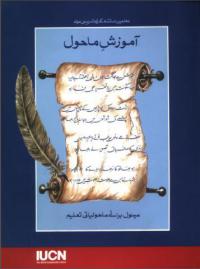
Aamozish-e-Mahol
This publication is a manual for environmental education.
Publication
2000
Authors
Saleem, Shakira
This publication is a manual for environmental education.
As the World Heritage Convention celebrates its 50th anniversary in 2022, over 1100 sites around the world are recognized as World Heritage – places that are so valuable to humanity that there conservation has been deemed our collective responsibility. Yet many of these exceptional places face increasing pressure from diverse types of development projects within and around the sites. Assessing the impacts of such projects is essential to both prevent damage to World Heritage and identify sustainable options. This Guidance and toolkit explains the process for achieving these goals. Offering practical tips and tools including checklists and a glossary, it provides a framework for conducting impact assessments for cultural and natural heritage sites.
The majority of marginalized households of forest fringe villages of Sundarban are dependent upon firewood for cooking. Burning firewood in traditional cook stove creates enormous indoor air pollution which directly effects women and children. Considering the gravity of the situation we have already installed more than 2500 Improved Cook Stoves (ICS) which is reducing firewood consumption by 30%. A single ICS may save minimum 900 kilograms of firewood annually (3 kilograms /day/family of 04 members x 300 days use/year), thus it reduce 1728 kilograms CO2 emission per annum. In it’s lifetime (10 years) a single ICS reduce 17280 kilograms of CO2 emission. ICS reduce indoor air pollution and improve the health condition of women and children. Due to reduction of cooking time, rural women may involve in other economic and social activities. ICS helps to protect the green covered area too. With minimum investment ICS may provide multiple benefit for rural marginalized community.
Tubbataha Reefs Natural Park (TRNP), a 97,030-hectare no-take protected area and UNESCO World Heritage Site in the Philippines, operates through a multisectoral governance and partnership system. The Tubbataha Protected Area Management Board provides shared direction, while the Tubbataha Management Office maintains continuity and carries out day-to-day management. Government agencies, local government, enforcement agencies, research institutions, conservation organizations, the tourism sector and other partners contribute personnel, expertise, financing, technical support and other resources. Tubbataha also engages MPA, government and academic networks to exchange experience and adapt management.
Women fishers and wives of Blue Swimming Crab (BSC) fishermen in Indonesia play important roles in the BSC fishery, yet their contributions and concerns are often overlooked in fisheries management. Limited communication skills and opportunities to express aspirations remain major barriers. Since 2021, Coral Triangle Center (CTC), Environmental Defense Fund (EDF), and Photovoices International (PVI) have supported women in Lampung and Central Java through training on BSC ecology, trade chains, and business canvas development; strengthening public speaking through photography and Training of Trainers; and creating spaces for women to speak and share through photo exhibitions and learning exchanges. By combining knowledge, confidence-building, and structured dialogue spaces, the approach strengthened women’s capacity to engage with decision-makers. As a result, women gained confidence, stronger family support, and government recognition. In 2024, women in Lampung were formally included in the provincial BSC Management Team.
Climate change and rapid land-use change intensify floods and droughts in the Lower Mekong Basin. Vulnerability is particularly high in transboundary areas, where upstream-downstream interdependencies limit purely national adaptation. In the 9C-9T sub-basin shared by Cambodia (9C) and Thailand (9T) nearly 1.8 million people are affected. Facilitated by Mekong River Commission (MRC) and supported by GIZ, both countries established a Joint Governance Mechanism for Transboundary Assessment, Planning and Action. With a shared vision, the endorsed 9C-9T Flood and Drought Master Plan guides investments towards Nature-based Solutions (NbS). Economic analysis strengthened the case and enabled German funding for two pilots: (1) a constructed wetland in Thailand reducing wastewater flowing to Cambodia, and (2) rural retention ponds in Cambodia for water security and reduced flooding. Local Climate Risk Assessments (CRA) translate basin-scale concepts into site-specific Ecosystem-based Adaptation (EbA) measures now being implemented.
Cambodia’s Tonle Sap Lake, a globally important fishery and carbon store, is rapidly losing flooded forests to deforestation, wildfire, and invasive species. Since 2010, Conservation International has worked with Community Fisheries to restore these habitats through nursery planting, direct seeding, and assisted natural regeneration. The work has revived 10 gallery forest species, including six globally threatened species, while supporting biodiversity such as the endangered hairy-nosed otter and the return of the fishing cat after more than a decade without confirmed records in the area. The program also strengthens community stewardship, stores carbon, and creates income opportunities for marginalized communities.
Continued support is needed because communities face limited experience, resources, and large-scale degradation. CI works with them to improve restoration techniques, study tree ecology, and identify effective ways to recover this unique ecosystem before degraded areas are overtaken by invasive shrubs and weeds.
As the World Heritage Convention celebrates its 50th anniversary in 2022, over 1100 sites around the world are recognized as World Heritage – places that are so valuable to humanity that there conservation has been deemed our collective responsibility. Yet many of these exceptional places face increasing pressure from diverse types of development projects within and around the sites. Assessing the impacts of such projects is essential to both prevent damage to World Heritage and identify sustainable options. This Guidance and toolkit explains the process for achieving these goals. Offering practical tips and tools including checklists and a glossary, it provides a framework for conducting impact assessments for cultural and natural heritage sites.
Developing countries like Nepal heavily rely on biomass fuels, contributing to climate change and health problems. In seeking to mitigate climate change, electric cooking technologies have emerged as a viable solution to reduce greenhouse gas emissions and deforestation while improving household ambient air quality and public health. PEEDA launched this project to combat climate change and improve health. The communities and policymakers were sensitized to adopting clean and renewable energy for cooking. Technical demonstration, live cooking sessions and the radio jingles has been used in creating the demands of electric stoves. Over 900 households has been supported with electric stoves and compatiable cookware in the Baiteshwor Rural Municpality. For sustaining the use of stove, 11 local technicians has been provided electric stove repair trainings. Further at policy level, Municipal Energy Plan (MEP) for this municipality has been developed to include the adoption of electric cooking over the next five year
Local communities in Nusa Lembongan, within Indonesia’s Nusa Penida Marine Protected Area (MPA), have transformed their relationship with mangrove forests from resource extraction to community led ecotourism and conservation. Since 2006, the Coral Triangle Center (CTC) has supported this transition through capacity building and management assistance, enabling the community to establish a locally managed mangrove ecotourism programme that generates sustainable livelihoods while promoting conservation. Today, a village-based organization oversees tourism operations, habitat stewardship, maintenance, and waste management, with local people actively participating in conservation activities. As tourism has grown following the COVID-19 pandemic, the community has strengthened management by introducing scheduled canoe operations, transparent pricing and visitor education to improve tourism quality while safeguarding the mangrove ecosystem.
Strengthening Resilience of Coastal Communities through the Local Early Action Plan-Climate Change Adaptation (LEAP-CCA) is a community-driven initiative in Mabul Island, Sabah, aimed at reducing climate change vulnerabilities through practical adaptation measures.
Located within the Coral Triangle, Mabul Island is rich in marine biodiversity but highly vulnerable to sea level rise, coastal erosion, wave levels during monsoon and typhoon. These threats affect critical ecosystems, fisheries, tourism, and local livelihoods.
Through collaboration between local communities, government agencies, NGOs, and tourism operators, vulnerable resources were identified and targeted adaptation actions developed. These include rainwater harvesting systems, coral restoration, and improved tourism management. The initiative has strengthened community awareness, improved local participation in climate action, and enhanced the resilience of ecosystems and livelihoods.
The MPA Support Network (MSN) is a multi-sectoral alliance established to strengthen and sustain the management of MPAs in the Philippines. In 2007, MSN launched the Para el MAR (PEM), a biennial national incentive mechanism that recognizes effectively-managed MPAs.
PEM has 4 categories: Outstanding Locally-Managed MPA, Outstanding Network, Outstanding NIPAS, and Best Mangrove Awards.
Contingents submit their assessment tools such as the MPA Management Effectiveness Assessment Tool, Network Effectiveness Assessment Tool, Management Effectiveness Tracking Tool, and means of verification for screening. Finalists present assessment findings and expert recommendations during the culminating activity which also serves as an avenue for benchmarking of best practices among MPA management bodies.
Since its establishment, PEM addressed challenges on effective MPA management and sustainable funding for long-term protection. MSN has witnessed an upward trend in effective MPA management in the country especially among repeat contenders.
The Calamianes Island Group Marine Protected Area Network (CMN) is an inter-LGU alliance of Busuanga, Coron, Culion, and Linapacan in northern Palawan, established in 2017 to jointly manage and conserve shared marine resources. Covering 44 Marine Protected Areas with a total of 44, 213 hectares, the network safeguards vital ecosystems such as coral reefs, seagrass beds, and mangroves.
The CMN was created to address pressing issues including Illegal, Unreported and Unregulated (IUU) fishing, climate change, habitat degradation, and overfishing. Through coordinated governance, strong advocacy, community engagement, and multi-sector partnerships, it strengthens marine protection, sustainable fisheries, and enforcement efforts. As a result, the network has improved ecological conditions, increased fish biomass, enhanced climate resilience, and generated socio-economic benefits through ecotourism and community-based initiatives, while promoting inclusive participation among local stakeholders.